Kankakee Investment Properties for Chicago Investors
April 16, 2026
April 16, 2026
If you own rentals in Chicago, you have probably looked beyond city limits and asked a simple question: can you buy more cash flow for less money nearby? Kankakee often comes up in that search because prices are lower than many Chicago neighborhoods, but lower entry cost does not automatically mean easier investing. You still need to account for local licensing, inspection rules, older housing stock, and the realities of managing a property about an hour south of the city. This guide will help you weigh the opportunity, the tradeoffs, and the practical steps before you buy. Let’s dive in.
For Chicago landlords, Kankakee stands out because it is close enough for regional ownership but far enough away that hands-on management becomes harder. Kankakee County notes the area is roughly 45 to 56 miles south of Chicago, depending on the reference point.
That distance matters. It can support a lower-cost expansion strategy, but it also changes how you handle leasing, inspections, repairs, and turnover. If you are used to checking on a building in person after work, Kankakee is a different operating model.
The main draw is straightforward: the cost to buy is relatively low compared with many Chicago investment options. Zillow reports an average Kankakee home value of $145,716, up 2.1% over the past year, while its rental page shows an average rent of $1,200.
Using those two figures, the rough gross rent-to-price ratio is about 9.9% before taxes, maintenance, vacancy, and management. That is the kind of headline number that catches an investor’s eye, especially if you have been priced out of stronger cash-flow plays in the city.
Still, gross numbers are only a starting point. In Kankakee, your real performance depends on what the property needs, how you manage compliance, and whether your expense assumptions are realistic.
A lower purchase price only helps if demand is there. The City of Kankakee 2025-2029 Consolidated Plan says local housing supply is not sufficient to meet need and that demand is high for both affordable and market-rate rentals.
That is an encouraging signal for long-term landlords. It suggests the market is not just inexpensive, but also active enough to support rental inventory across different price points.
At the same time, the same plan shows 11,383 total housing units, with 9,427 occupied and 1,956 vacant. That means lease-up strategy, turnover planning, and property condition still matter. A unit that is priced right and presented well is in a much different position than one that needs work or misses local expectations.
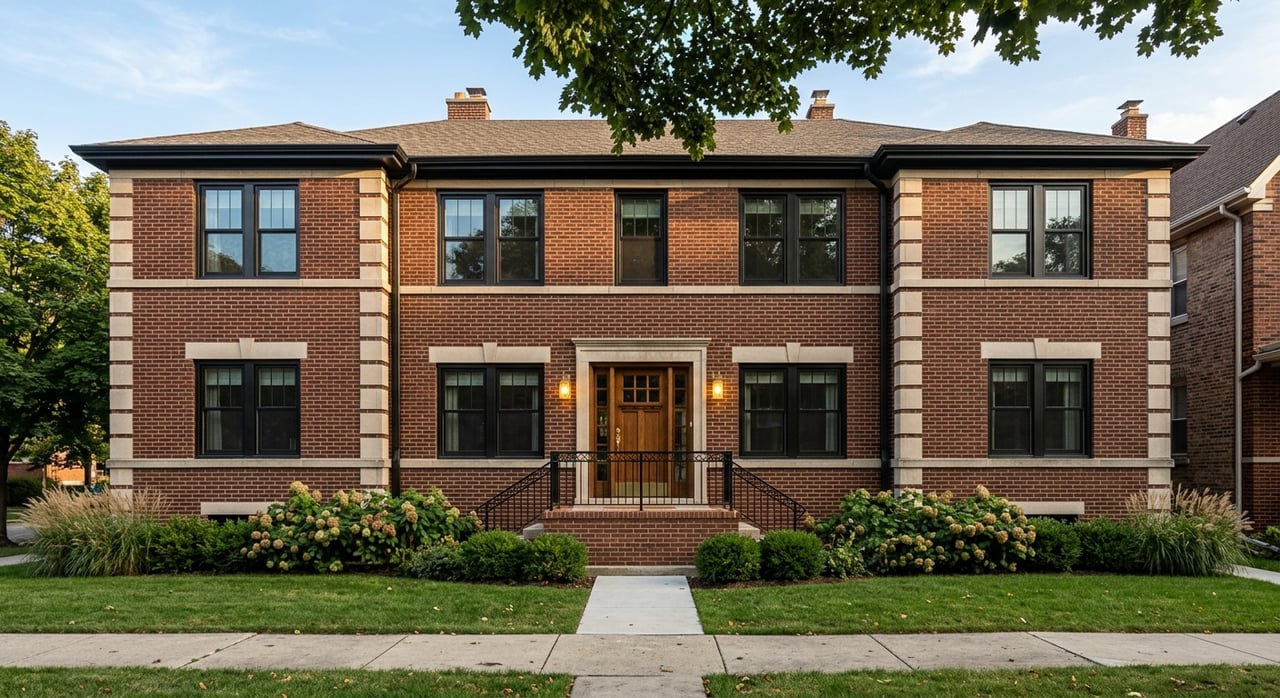
Kankakee’s housing stock leans heavily toward low-rise properties, which makes it a practical market for landlords buying one building at a time. According to the city’s housing plan, the local mix is 63% one-unit detached homes, 11% 2-to-4 unit buildings, 10% 5-to-19 unit buildings, and 12% 20+ unit buildings.
For many Chicago-based investors, that points to familiar targets like:
The renter unit mix also supports family-sized layouts. The city plan shows renter units are 23% one-bedroom, 33% two-bedroom, and 35% three-bedroom or larger. That makes practical, larger-format rentals especially relevant in your search.
This is where many first-pass deal analyses fall short. Kankakee may look attractive on price, but the age of the housing stock can materially change your returns.
The city plan says 43% of occupied units were built before 1950, and about 10,489 units were built before 1980. For you as an investor, that can mean more deferred maintenance, more systems nearing replacement, and a higher chance that a “cheap” acquisition becomes a capital expense-heavy hold.
Before you buy, pay close attention to:
If your strategy is value-add, older stock may still work well. But you need to underwrite for repairs and reserves from the beginning, not after closing.
If you are coming from Chicago, do not assume the rules will be simpler just because the market is smaller. The City of Kankakee rental code FAQ states that occupied rental housing requires a rental license.
The license is not transferable, which matters if you are acquiring an occupied property and hoping to keep operations moving without interruption. The listed fee is $65 for a single unit plus $11 for each additional unit.
That same city guidance also says inspections happen every two years and cover interior and exterior conditions. All units are inspected, utilities must be on, and the owner or agent must be present for each inspection.
For a Chicago landlord, this may be the most important operational detail in the entire deal. The city says an owner may choose a manager or agent only if that person lives in Kankakee County, and the owner or agent must attend inspections in person.
In practical terms, that means a local property manager or local agent relationship is not just convenient. It is often essential if you are not regularly on site.
This rule can affect your acquisition strategy in several ways:
If you are building a portfolio, your vendor bench matters just as much as your purchase price.
Many Chicago investors are comfortable with cosmetic rehab or heavier repositioning. In Kankakee, you need to factor in permitting early. The city states permits are required for construction, alteration, repairs, demolition, and utility or system work, and work should not begin before permit approval except in emergencies.
That is especially important in a market with older homes. Even a modest renovation plan can touch systems, safety items, or structural issues that require approvals and inspections.
If your buy box includes distressed or dated properties, build extra time into your timeline. Faster closings and lower prices can lose their appeal if your rehab schedule is unrealistic.
Local rules are only part of the picture. State law also affects your day-to-day ownership and risk.
Illinois Legal Aid explains that private landlords must keep units safe and habitable. For non-emergency problems required by law or by lease, landlords generally have 14 days after written notice to make repairs. The same resource notes that tenants are protected from retaliation for requesting repairs or exercising legal rights.
Security deposits also deserve attention. Illinois Legal Aid notes that in most of Illinois there is no statewide cap on the deposit amount, but in buildings with 5 or more apartments, landlords must provide a written damage statement within 30 days after move-out and return the deposit within 45 days. For buildings with 4 or fewer apartments, the state does not impose the same specific deadline unless the lease does.
These rules may seem administrative, but they affect systems, documentation, and compliance risk. That is another reason operational discipline matters if you own from a distance.
Kankakee’s low entry prices can look great on the front end, but taxes deserve careful review. The Kankakee County Clerk 2023 tax-rate report shows city tax-code totals ranging from 8.5687 to 14.7866 per $100 of assessed value.
Because Illinois assesses property at one-third of market value, a $145,716 home could imply roughly $4,162 to $7,182 in annual property tax before exemptions, depending on the tax code. That is an estimate, but it is a useful reminder that gross rent does not equal net income.
When you compare a Kankakee deal to a Chicago deal, make sure you are comparing:
A lower purchase price can still win. You just need the full picture.
Kankakee tends to make the most sense for landlords who want cash-flow-oriented rentals and are comfortable with older homes. Based on the market data and city rules, it can be a strong fit if you are targeting small multifamily or single-family rentals and have a clear plan for repairs, leasing, and local oversight.
You may be a good fit for this market if you:
It may be a tougher fit if you want a fully passive out-of-area rental without a local team in place.
Before you buy an investment property in Kankakee, walk through this checklist:
A market like Kankakee can reward disciplined investors, but it tends to punish loose assumptions.
Kankakee can offer an appealing mix of lower entry prices and real rental demand, which is exactly why it is on the radar for Chicago landlords looking to grow. But the opportunity is not just about finding a cheap property. It is about buying the right asset, with the right reserves, under the right local operating structure.
If you are comparing city deals to suburban or downstate-style investments, a grounded acquisition plan matters more than a flashy rent-to-price ratio. The best results usually come from pairing smart underwriting with local execution.
If you want help evaluating multi-unit or value-add opportunities through an investor lens, connect with Taylor Dixon Group. Our team brings Chicago market perspective, rehab-minded analysis, and hands-on investor support to help you buy with more clarity and confidence.
Stay up to date on the latest real estate trends.
Get assistance in determining current property value, crafting a competitive offer, writing and negotiating a contract, and much more. Contact Taylor Dixon Group today to start your home searching journey!