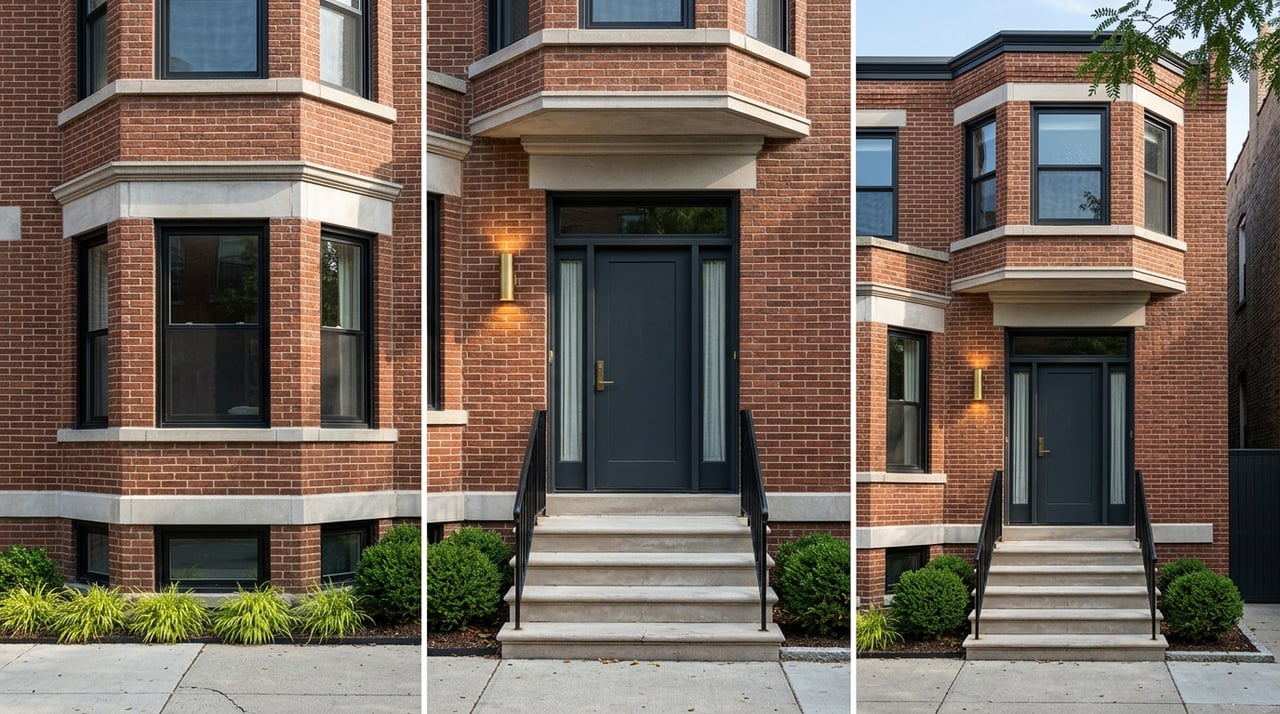
South Shore Chicago Multi-Family Investment: 2026 Outlook
July 23, 2026
July 23, 2026
The easy headline writes itself. Presidential library opens on Juneteenth 2026, tourists flow into Jackson Park, rents jump, cap rates compress, everybody wins. It is the story out-of-state capital started telling itself around 2017, and it is the story that just quietly blew up on the buyers who paid to hear it.
For a small-portfolio investor underwriting a two-flat, a six-unit, or a value-add courtyard building in South Shore right now, the useful question is not whether the Obama Presidential Center will lift the neighborhood. It probably will, eventually. The useful question is what your basis needs to be for that lift to actually reach your returns, given what the last cycle did to comps, tax bills, and lender appetite.
South Shore was not a sleeper. From 2011 through 2023, the predominantly Black lakefront community just south of Jackson Park notched the most sales of any Chicago neighborhood for buildings with five units or more, according to the Institute for Housing Studies at DePaul University. In some years during that stretch, South Shore saw more than twice as many such sales as runner-up neighborhoods, with more than 100 sales in both 2018 and 2022, while no other Chicago community area tallied more than 80 in a single year during the entire 13-year period.
Then the music stopped. 2024 marked a sharp decline, with only 34 sales of buildings with at least five units, the lowest level since 2010. The distress showed up on schedule. Lenders filed 20 foreclosure lawsuits for South Shore buildings with at least five units in 2024, the most in a decade and by far the most of any Chicago neighborhood that year, with the next closest, Chatham, at 11. Zoom out to securitized debt and the concentration is even starker. Out of 25 Chicago multifamily loans sold into CMBS pools and now marked as delinquent, six are backed by property in South Shore, and within the entire Chicago metro area's 31 such delinquent CMBS loans, nearly 20 percent trace back to South Shore.
That is a lot of failure in one ZIP code. The question is why.
Out-of-state buyers paid prices that Chicago rents and Chicago operating costs could not service, and every one of those trades became a new comp for the next out-of-state buyer.
Investment accelerated in 2017 as groups from New York and elsewhere paid above-market prices for South Shore properties, and by 2024, multifamily values in the area reached $73,000 per unit, rising far faster than rents or tenant incomes. Many local buyers were unable to match these offers, which artificially inflated property comps and normalized higher pricing. The rest of the story writes itself. Speculative landlords skipped essential repairs, allowing properties to deteriorate. Vacancy rose. Revenue dropped. Defaults followed.
Bill Eager, senior vice president at nonprofit developer Preservation of Affordable Housing, said he has heard of no dramatic rent increases in Woodlawn and South Shore, and while South Shore apartment buildings have increased in value, some investors who went in the last few years are having buyer's remorse because rents have not rewarded their speculation. That is the polite version. The CMBS delinquency figures are the impolite one.
The distress cycle is not a headline for the next quarter. It is the window a local buyer can actually price into a deal. New owners are stepping in to stabilize assets and invest in repairs, and observers say experienced, local firms are improving conditions across South Shore. That is the transfer of basis local operators have been waiting for.
Current pricing benchmarks worth underwriting to:
| Metric | Where it sits mid-2026 |
|---|---|
| South Shore 3-month median sale price (all residential, through May 2026) | $144K, down 15.3% year over year |
| Chicago Class B/C workforce multi-family cap rates on in-place income | 5.5–8.0%, with value-add deals often closer to the higher end |
| 2024 peak value benchmark set by out-of-state buyers | ~$73,000 per unit |
| South Shore days on market, multi-family (May 2026) | 65 days on average |
A local buyer's underwriting question is whether they are paying closer to that $73K-per-unit peak or to a basis where an 8% cap on real, collected rents actually pencils.
The Obama Presidential Center opened June 18, 2026, and it is a genuine institutional anchor. The 19.3-acre Jackson Park campus houses a 225-foot museum tower, a digital library, an athletic facility, a café, conference space, a branch of the Chicago Public Library, and offices for the Obama Foundation, and the center cost roughly $850 million to build. The center's projected annual attendance is about 600,000, a bit less than half the yearly draw of its Jackson Park neighbor, the Griffin Museum of Science and Industry.
Longtime residents have already lived through the pricing effect. In the area covered by the city's Jackson Park Housing Pilot, median rents have increased 43 percent since 2015 and home values have spiked 130 percent, according to the Chicago mayor's office and South Shore Ald. Desmon Yancy. That is what the last decade already priced in. The question for a buyer today is what is left.
The Obama Foundation itself is telling investors to slow down. Obama Foundation CEO Valerie Jarrett predicted a "tremendous impact" from the project but was cautious about detailed projections, saying she would rather wait until a year beyond the opening. And the comparable-institution warning is on the record. Because the museum remains a bit off the beaten path for many tourists, neighborhood leaders could face a similar challenge to Pullman, where visitors "come, they go there, and then they leave," according to David Doig, president of Chicago Neighborhood Initiatives.
Underwrite the deal on 2026 rents and 2026 vacancy. Do not underwrite it on the tourism narrative.
South Shore Chamber of Commerce Executive Director Tonya Trice attributes the steady increase in commercial rents in Woodlawn and South Shore mostly to sharply higher property taxes, common to many communities, and other business owners also blame increased costs for property insurance. Residential landlords face the same pressure.
South Shore sits inside the City of Chicago tri, which means the neighborhood was reassessed in the 2024 cycle, with the 2025 cycle covering the northern suburbs and the 2026 cycle covering the southern and western suburbs. That sounds like relief. It is not. After the 2024 Chicago reassessment cycle and Board of Review appeals, the Cook County Assessor reported that residential property's share of the tax burden increased because commercial property won more than $3 billion in appeals, and many Chicago homeowners saw bills rise even when their assessed value did not change much.
For a small multi-flat operator, this is the single most important underwriting adjustment to make in 2026:
Two ordinances shape what a landlord can do with a South Shore or adjacent Woodlawn building. The Obama Community Benefits Agreement Coalition pushed the City Council to pass the Jackson Park Housing Pilot Ordinance last year and the Woodlawn Housing Preservation Ordinance in 2020, both intended to protect South Side residents from rising rents and displacement caused by the Obama Center. These affect noticing, preservation of naturally occurring affordable units, and disposition timelines. Read the actual ordinance text before you close, not the summary a broker slides across the table.
On the supply side, real investment is coming in on the affordable side, too. Thrive Exchange, a $35 million transit-oriented development, features 43 affordable studio, one- and two-bedroom apartments and ground floor commercial space and is South Shore's first multi-family project of its type in more than 50 years, with construction expected to be complete by April 2026. Combined with the South Shore Chamber's development plan for 71st Street and city-backed proposals for Stony Island, the commercial corridors that support your tenants' daily lives are getting real capital for the first time in a long time.
That matters for rent-growth assumptions, but it also matters for who your competition is when you go to lease a rehabbed unit.
For a local, hands-on buyer with rehab capacity and a property-management bench, South Shore in mid-2026 is a rare kind of market: the distress cycle has already washed through, the out-of-state bid has thinned, the institutional catalyst has actually opened rather than being priced as a promise, and the operators buying today are setting basis rather than chasing it. The pro forma has to be honest about taxes, insurance, and rents that have not rewarded speculation. Done that way, the numbers work in a way they simply did not from 2017 to 2022.
No. In 2024 the activity fell off, and South Shore came in fourth in Chicago. Transaction volume is still meaningful, but the days of running away with the crown are, for now, over.
Yes. South Shore's multifamily market faces rising foreclosures as out-of-state investors exit and local operators work to restore stability. That handoff is the trade.
Maybe, on a long horizon. It will not change your year-one operating story. South Siders counting on a major economic boost from the Obama Center will need to be patient, says Ghian Foreman, president and CEO of Emerald South Economic Development.
Trusting 2021–2023 comps as market value. They were not. They were the residue of a capital flow that ended, and the CMBS delinquency list is where those trades are now living.
If you are evaluating a South Shore acquisition, a value-add rehab, or a portfolio disposition and want a walk-through of what current basis, tax exposure, and lease-up look like on a specific building, Taylor Dixon Group works these blocks every week. Get your free home valuation to start the conversation with numbers rather than narrative.
Stay up to date on the latest real estate trends.
Get assistance in determining current property value, crafting a competitive offer, writing and negotiating a contract, and much more. Contact Taylor Dixon Group today to start your home searching journey!