Buying a Hyde Park Co-Op: Why the Lowest Price Gets Tricky
August 20, 2026
August 20, 2026
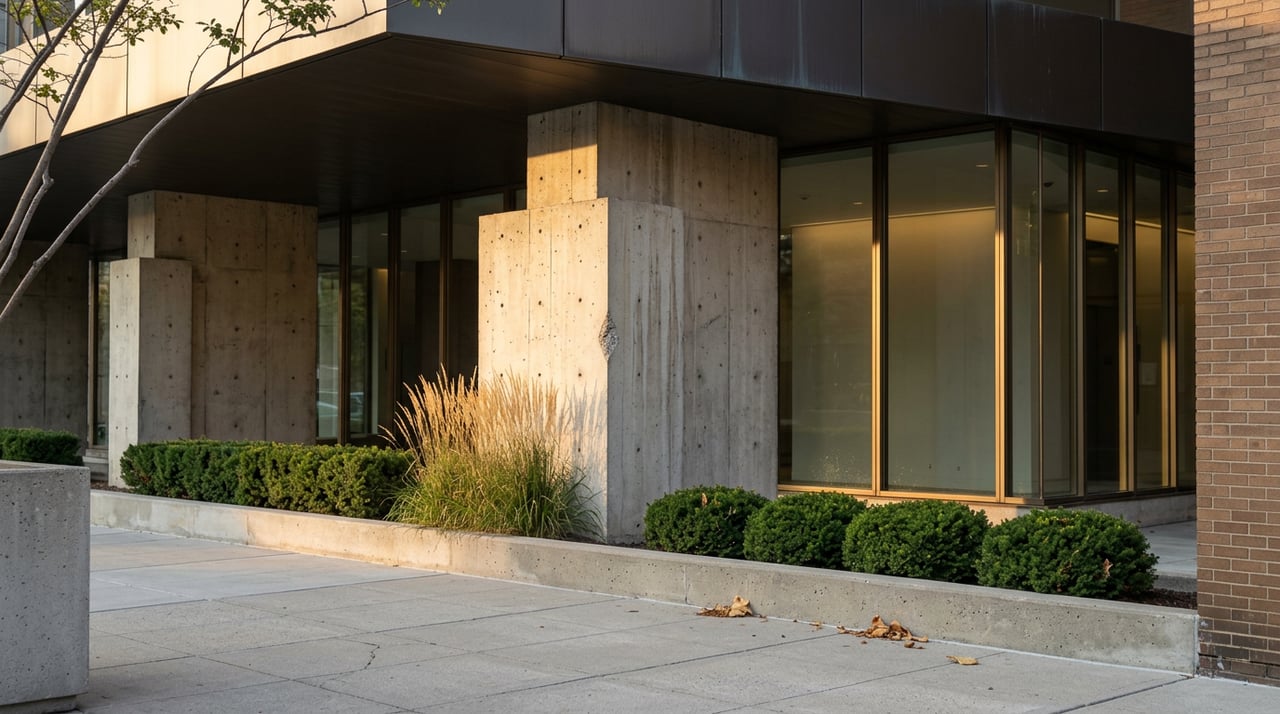
A two-bedroom unit at The Promontory, the Mies van der Rohe tower at 5530-5532 South Shore Drive, listed this summer for $110,000. Walk two blocks west and a comparable two-bedroom condo will run you closer to $280,000, which is roughly where Hyde Park's median list price sat in July 2026. Same neighborhood, same lake views from certain floors, same walk to the Metra. A $170,000 gap.
Buyers who spot that gap usually assume they found a loophole. They didn't. They found a different asset class wearing a familiar price tag, and the gap exists precisely because most buyers can't cross it. Understanding why is the difference between closing on a Hyde Park co-op in ninety days and losing three months to a board that was never going to say yes.
When you sign a contract on a condo, you're buying real property and a deed goes with it. A co-op works differently. You're buying shares in the corporation that owns the entire building. The Promontory's 122 units all sit inside one corporation. So do the 115 units at Parkshore Cooperative on East 55th Street, built in the 1920s, and the units at Vista Homes overlooking Jackson Park.
That structure is not a technicality. It changes who can say yes to your offer, what a lender will finance, and what happens to your money if the building needs a new roof.
Here's the side-by-side that matters before you write an offer:
| Condo | Co-op | |
|---|---|---|
| What you own | The unit, plus a share of common elements | Shares in a corporation |
| FHA/VA financing | Generally available | Not available |
| Typical down payment | As low as 3-5% with conventional financing | Commonly 20-50% of purchase price |
| Approval process | Association review | Board review |
The financing gap is where most Hyde Park co-op deals die, and it's also why the prices stay low. Co-ops don't qualify for FHA or VA loans, which removes a large share of first-time buyers before they even look at a listing. The lenders who will finance a share purchase typically require a down payment between 20 and 50 percent of the purchase price, set by the building's board based on its financial health and reserve fund.
That's not a soft guideline. If you're planning to put 10 percent down and finance the rest the way you would on a single-family home, a Promontory unit or a Parkshore unit is off the table before you've toured it. The pool of people who can actually close on a $110,000 co-op unit is smaller than the pool who can close on a $280,000 condo, and that scarcity of qualified buyers is a large part of why the price sits where it does. The building isn't cheap because it's less desirable. It's cheap because the buyer pool is capped by a cash requirement most people can't meet.
Listings for Promontory units show monthly assessments in the range of $815 to $1,283. Compared to a condo association fee in the same neighborhood, that number looks steep on its face. It isn't a fair comparison, because the two fees cover different things.
At the Promontory, that fee covers heat, air conditioning, water, insurance, security, a doorman, cable, exercise facilities, exterior maintenance, lawn care, scavenger service, and snow removal.
Assuming you clear the cash threshold, the board package is the next filter, and it's the step that catches buyers off guard on timeline more than on substance. Expect to submit two to three years of tax returns, W-2s or recent pay stubs, and, if you're self-employed, profit-and-loss statements with a CPA letter verifying income stability. Boards commonly want to see at least twelve months of maintenance fees held in liquid reserves after closing, on top of your down payment.
Then comes the interview. A co-op board's review is a key step in the process. Boards are checking two things: can this person afford the monthly obligation for years, not just at closing, and will they be a workable neighbor in a building where every resident owns a piece of the whole. That second question is subjective by design, which is why personal references carry real weight in a co-op package in a way they never do on a standard condo purchase.
Factor the board timeline into your contract. Closings that include co-op board approval commonly run three to five months, longer than a typical condo sale, because the mortgage commitment has to be in hand before the board package even gets submitted to the managing agent.
The Promontory carries an extra wrinkle worth knowing before you buy there specifically. Chicago City Council granted the building official Chicago Landmark status on November 20, 2019, following a preliminary designation vote in August of that year. The building had already been listed on the National Register of Historic Places since 1996, recognized as the first International Style high-rise built in Chicago and the first high-rise Mies van der Rohe ever designed.
The Real Deal reports that landmark status protects the visible exterior and lobby. If you're the kind of buyer drawn to a building specifically because of its architectural pedigree, that's a feature.
Roughly ten co-op units were listed for sale across Hyde Park as of mid-2026, a small slice of a market where condo inventory ran closer to sixty-nine listings that same month. That's a thin market on the co-op side, and thin markets move slowly in both directions. Sellers can't rely on a deep buyer pool to bid up a listing, and buyers who show up with the cash and patience the process requires face less competition than they would on a comparably priced condo.
If you're comparing a Promontory unit to a University Park Condominium unit a few blocks away, designed by I.M. Pei and Araldo Cossutta, you're not just comparing square footage and finishes. You're comparing two different ownership structures with two different buyer pools, two different financing paths, and two very different closing timelines. The lower sticker price on the co-op side isn't a discount. It's the market pricing in the friction.
Can I get a conventional mortgage for a Hyde Park co-op? No. Co-ops don't qualify for FHA or VA loans, and conventional mortgages don't apply in the same way since you're financing a share purchase rather than real property. A smaller number of lenders offer share loans specifically for co-op purchases, and it's worth confirming a lender's co-op experience before you write an offer.
Are all Hyde Park co-ops financed and governed the same way? No. Down payment minimums, reserve requirements, and board policies are set building by building. The Promontory's terms won't necessarily match Parkshore Cooperative's or Vista Homes'. Read each building's specific requirements before assuming a percentage.
Does landmark status only apply to the Promontory? Among the co-ops discussed here, yes, the official Chicago Landmark designation applies specifically to the Promontory. Other Hyde Park co-op buildings may carry their own historic designations or none at all, so check a specific building's status rather than assuming.
Is a co-op a worse investment than a condo? Not inherently, but it's a different kind of hold. Resale pools are smaller, and appreciation can behave differently than in the condo market. Buyers who go in understanding the structure tend to be the ones satisfied with the outcome.
If you're weighing a Hyde Park co-op against a condo and want someone who can actually read a building's financials and board requirements before you fall for a listing photo, Taylor Dixon Group can walk you through both sides of that math. Get your free home valuation and let's figure out which structure actually fits what you're trying to do.
This article is general information, not legal, tax or financial advice. Consult a qualified professional about your situation.
Stay up to date on the latest real estate trends.


Get assistance in determining current property value, crafting a competitive offer, writing and negotiating a contract, and much more. Contact Taylor Dixon Group today to start your home searching journey!