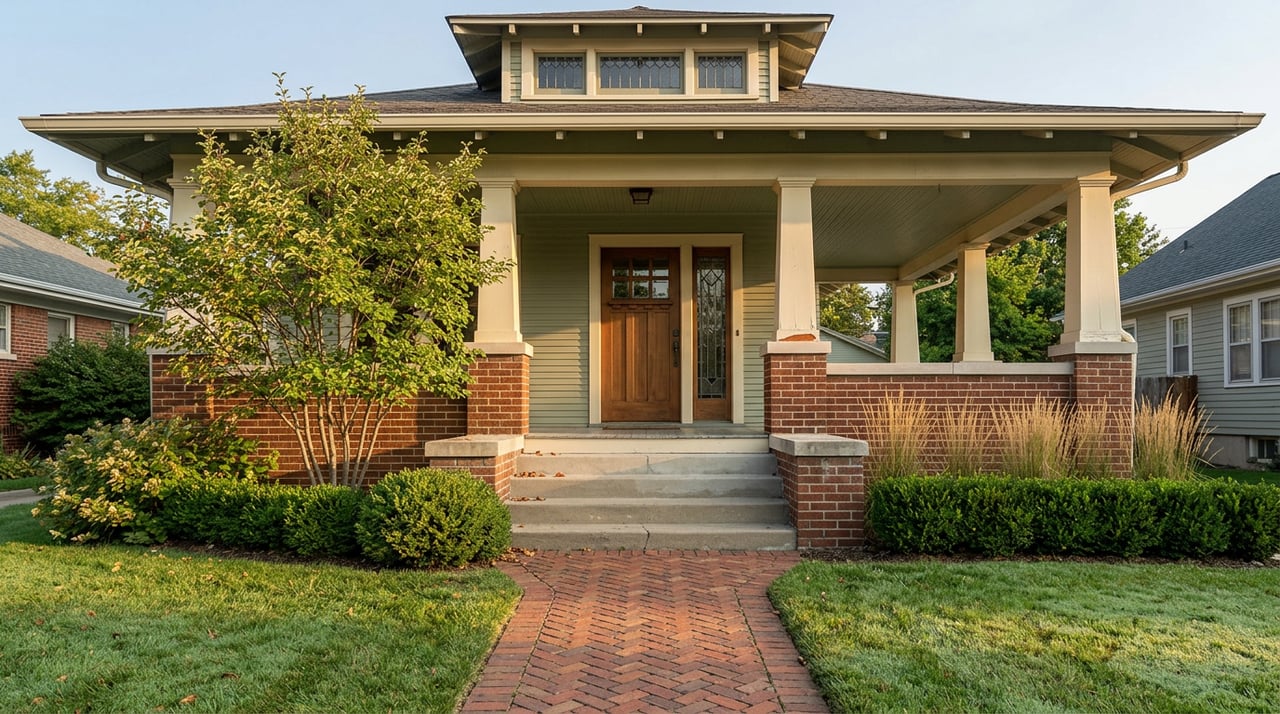
Beverly's Historic Districts: Where Landmark Review Applies
September 24, 2026
September 24, 2026
A decade ago, a Beverly couple asked the Commission on Chicago Landmarks for permission to tear down a home damaged by mold. The couple argued that the infestation had spread deep enough into the wood framing that repair amounted to the same thing as demolition. The Commission disagreed and denied the request, according to reporting in the Beverly Review at the time. The homeowners were left negotiating a replica design that would satisfy the Commission's standards for the district.
That kind of denial is real, and it can genuinely happen in Beverly. But it can only happen on a small number of specific blocks. Most of the neighborhood sits under a different kind of historic designation entirely, one that carries none of that authority. If you are shopping for a fixer-upper on the South Side or weighing a rehab project against a similar bungalow in Portage Park or Marquette Park, the difference between these two labels matters more than anything printed on the listing sheet.
Nearly all of Beverly and Morgan Park, roughly the stretch from 87th Street to 115th Street, sits inside the Ridge Historic District. It was listed on the National Register of Historic Places on May 28, 1976, and this spring the Beverly Area Planning Association and the Ridge Historical Society marked its 50th anniversary with commemorative banners along Longwood Drive and a City Council resolution sponsored by Ald. Matt O'Shea. It is one of the largest urban districts on the National Register, encompassing more than 3,000 buildings.
Here is the part that surprises a lot of buyers: National Register status is largely honorary. It recognizes the architecture and history of a place, and it opens the door to certain incentive programs, but it does not give any commission or agency the power to approve or deny what an owner does to their own house. Absent federal funding tied to the project, an owner inside the Ridge Historic District can update siding, replace windows, add a rear addition, or demolish a structure using the same permitting process as anyone else in Chicago.
Real design authority in Beverly comes from a much smaller, separate layer: three Chicago Landmark Districts and five individually designated Chicago Landmark properties, all nested inside the boundaries of the Ridge Historic District.
| Designation | Type | What It Covers | What It Controls |
|---|---|---|---|
| Ridge Historic District | National Register (1976) | Roughly 87th to 115th Street, over 3,000 buildings | Recognition and incentive eligibility only; no design review for private owners |
| Longwood Drive Historic District | Chicago Landmark District (1981) | 9800–11100 blocks of Longwood Drive, 10200–10700 blocks of Seeley Avenue, plus cross streets, including the Givins Beverly Castle | Exterior alterations, additions, and demolition of contributing buildings require Commission review |
| Walter Burley Griffin Place Historic District | Chicago Landmark District (1981) | 1600–1800 blocks of West 104th Place | Same Commission review, protecting the largest concentration of Griffin's Prairie School houses in the country |
| Beverly/Morgan Park Railroad Station Historic District | Chicago Landmark District (1995) | Five Metra Rock Island stations at 91st, 95th, 99th, 107th, and 111th Streets | Commission review applies to the station structures, not surrounding homes |
| Five individual landmarks | Chicago Landmark (1994–1999) | Iglehart House, the Frank Lloyd Wright-designed Adams House, two Wright American System-Built Homes, and Palliser's Cottage Home #35 | Same review requirement, tied to the specific parcel regardless of what district surrounds it |
If your property is in one of the bottom four rows, confirm whether the designation requires Commission review before setting your renovation timeline; in the Railroad Station Historic District, review applies to the station structures, not surrounding homes. If no Chicago Landmark District or individual landmark designation applies to your property, the Ridge Historic District alone carries no design review, and the city's ordinary building permit rules apply.
None of this makes the Ridge Historic District meaningless. City guidance on landmark designation is clear that a property's status does not directly change how the Cook County Assessor values it or what tax rate applies. The Beverly Area Planning Association says the designation opens up a set of preservation incentive programs, including a property tax assessment freeze and a preservation easement program, both available to eligible restored homes whether they sit inside a Chicago Landmark District or simply within the wider National Register boundary. Separately, the Chicago Bungalow Association runs its own certification and restoration incentive track that has nothing to do with either historic designation and is open to eligible bungalows across the neighborhood.
In practice, a buyer in Beverly can end up with real financial incentive to restore a property carefully even without ever facing a Commission hearing.
Before you budget a renovation timeline in Beverly, confirm which of the five rows above actually applies to the parcel. The Commission on Chicago Landmarks reviews permit applications as part of the normal building permit process rather than requiring a separate landmark permit, and most routine work is handled at the staff level. Larger or more visible exterior changes, additions, and any demolition request go before the full Commission, which meets monthly on the first Thursday. That is the process the mold-damaged home went through, and that review applies to properties in the Longwood Drive and Griffin Place districts, to the station structures in the Railroad Station district, and to the five individually landmarked parcels.
Outside those specific blocks, a rehab in Beverly moves at the same pace as one in any other Chicago neighborhood. The historic label on the listing does not, by itself, tell you which situation you are in. The block does.
Over the three months ending in August 2026, the median sale price in Beverly was $402,000, essentially flat compared with the same period a year earlier. Price per square foot told a different story, climbing 8.4 percent over that same year to $232. At the same time, the typical home took 59 days to sell, up from 39 days a year earlier, even as sale volume held steady at 51 homes in August, matching the prior year's pace.
Read together, that is a market where buyers are paying more for the right square footage but taking longer to commit. That pattern fits a neighborhood where condition and provenance vary block by block, where a fully restored Craftsman on a protected stretch of Longwood Drive and a needs-work bungalow two blocks away can carry very different renovation math even at similar list prices. For context, well-kept bungalows on the Northwest Side in neighborhoods like Portage Park often sell in the $350,000 to $500,000 range. Beverly's architectural depth and preservation profile have generally kept its prices at or above that band, but the spread inside the neighborhood itself is where the real due diligence work happens.
A few questions are worth answering before a bid goes in on anything described as historic in Beverly:
None of this is a reason to avoid Beverly. The neighborhood's Home Tour each spring draws people from across the city specifically to see what careful, block-by-block preservation looks like when it works. It is a reason to read the fine print before you assume every "historic" listing in the neighborhood comes with the same set of rules.
Does living in the Ridge Historic District affect my property taxes? No. City guidance states that a landmark designation does not directly change the Cook County Assessor's valuation or the applicable tax rate. Eligible restored homes can separately apply for preservation-related tax incentive programs.
What if I want to demolish or add onto a home in Beverly? It depends on the designation. Inside the Longwood Drive or Walter Burley Griffin Place Chicago Landmark Districts, or on one of the five individually designated landmark parcels, exterior work needs Commission on Chicago Landmarks review as part of your building permit. In the Railroad Station district, review applies to the station structures, not surrounding homes. For all other homes and properties in the Ridge Historic District, standard city permitting rules apply.
Can I still get tax incentives without being in a Chicago Landmark District? Yes. Programs like the property tax assessment freeze and Chicago Bungalow Association certification are available to eligible historic homes across the wider Ridge Historic District, independent of whether a parcel sits inside one of the three Chicago Landmark Districts.
Whether you are weighing a full rehab on a protected block or a straightforward update a few streets away, the renovation math changes with the address. Taylor Dixon Group works through that math with buyers and investors across Beverly every week. Get your free home valuation and find out exactly what your project, or your next purchase, is actually working with.
This article is general information, not legal, tax or financial advice. Consult a qualified professional about your situation.
Stay up to date on the latest real estate trends.


Get assistance in determining current property value, crafting a competitive offer, writing and negotiating a contract, and much more. Contact Taylor Dixon Group today to start your home searching journey!